
The Beginner's Guide for Women to Exercise Your Emotional Health in the Workplace
Work can be stressful for women, and the guide says some of the hardest problems are inner and emotional ones that only you can address. This free guide from iGROW explains why looking after your emotional health matters, three steps you can take, and four ways to give G.O.O.D. vibes to yourself: confidence, observing thoughts, objecting to your inner critic and doting on yourself.
Free PDF · 16 pages · By iGROW
What you will learn
Preview the guide
Why does emotional health matter at work?
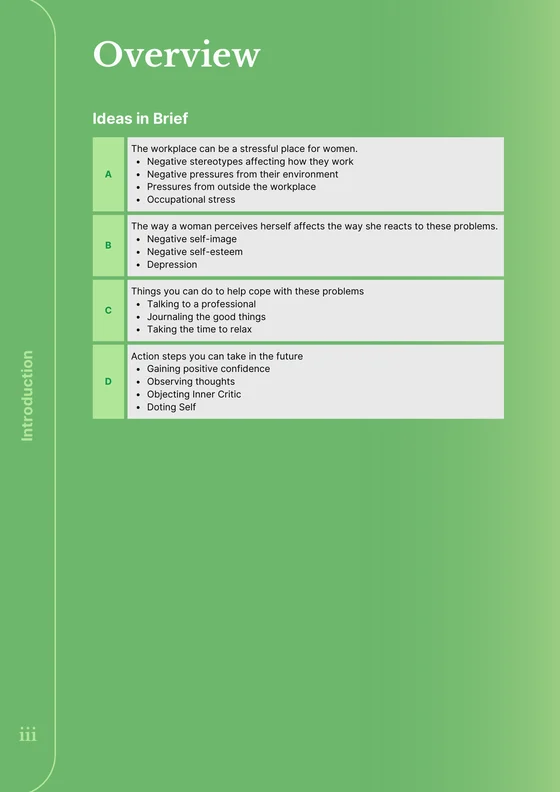
The guide says women can still face stress, anxiety and more subtle forms of discrimination at work, and that much of this takes away from the energy needed to get the job done. It lists negative stereotypes, pressures from the environment, pressures from outside the workplace and occupational stress.
Some of these problems are inner and emotional, the guide says, and can only be addressed by the person themselves. Looking after your emotional health makes problems at work easier to address. It also says that how you see yourself shapes how you react: seeing difficult moments as temporary, and yourself as competent and strong, changes how you respond.
What steps can you take to better your emotional health?
The guide says it is never easy and not one-size-fits-all, but these three can help.
Talk to a professional
Friends and family are great, but a psychiatrist or therapist can help you look at your experiences from a more objective perspective and organise your thoughts.
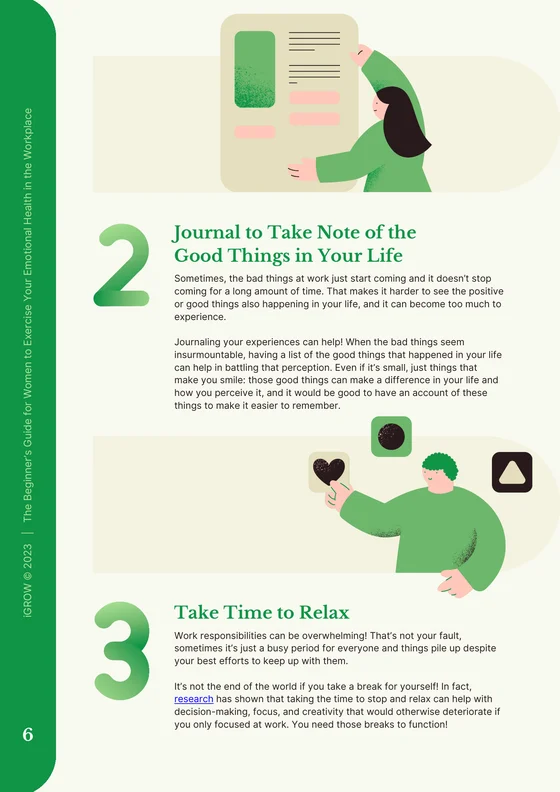
Journal the good things
When bad things keep coming, a list of the good things, even small ones that make you smile, can help you see your life differently.
Take time to relax
The guide says research shows that stopping to relax can help with decision-making, focus and creativity.
Free PDF, emailed to you. Just your name and email.
What are the four G.O.O.D. ways to support yourself?
The guide calls these ways to give G.O.O.D. vibes to yourself, and gives questions to ask yourself for each.
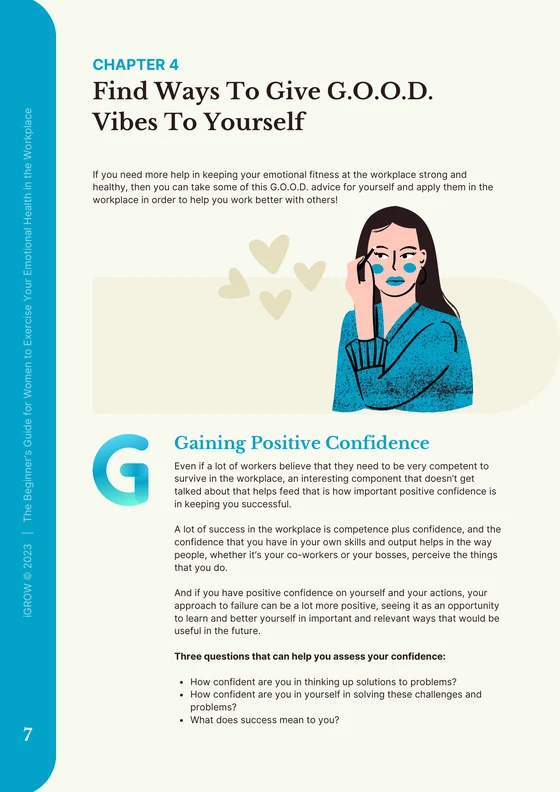
G: Gaining positive confidence
The guide says success is competence plus confidence. Ask yourself: how confident am I in thinking up solutions to problems, and in solving them? What does success mean to me?
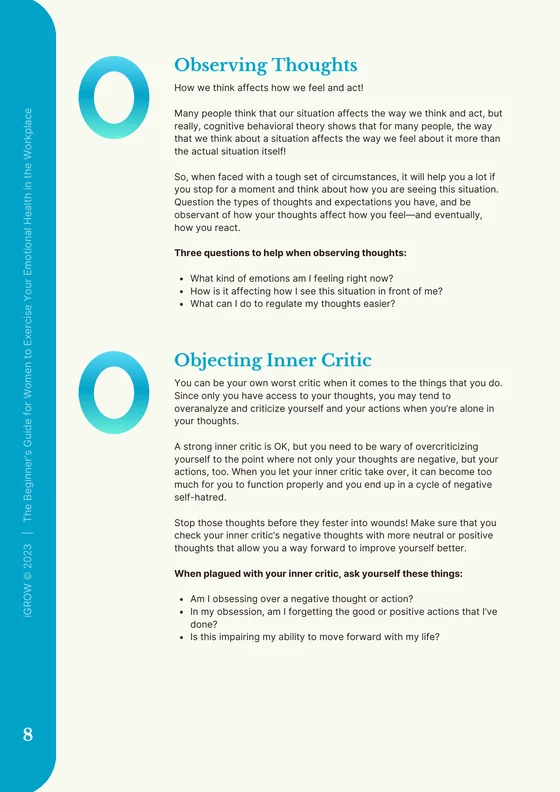
O: Observing thoughts
How you think about a situation affects how you feel about it. Ask yourself: what emotions am I feeling right now, how is that affecting how I see the situation, and what can I do to regulate my thoughts?
O: Objecting to your inner critic
Check negative thoughts with more neutral or positive ones. Ask yourself: am I obsessing over a negative thought, am I forgetting the good things I have done, and is this stopping me moving forward?
D: Doting on yourself
Build a positive self-image you can return to. Ask yourself: how do I see myself today, and in the future? Which goals or beliefs shape that, and what could help me reach my goals?
Try this week: three questions about your thoughts
Next time a situation at work makes you feel tense, stop for a moment and ask the guide's three questions: what emotions am I feeling right now, how is that affecting how I see this situation, and what can I do to regulate my thoughts? Then write down one good thing from the day.
Who publishes this guide?
iGROW Pte Ltd is a workplace mental health consultancy in Singapore, established in 2009, with a multi-disciplinary team of professional psychologists, coaches, counsellors and consultants who work with employers on workplace mental well-being.
More free guides
All guides: iGROW resources and free guides
Also free: The Complete Guide to Managing Your Stress
Also free: The Self-Care Toolkit
Frequently asked questions
Is the guide free?
Yes. It is a free 16-page PDF; enter your name and email and we will send it to you.
Who is this guide for?
It is written for women at work, as a beginner's introduction to looking after your emotional health. It speaks to you directly, so you can use it for yourself.
What is in the guide?
Why emotional health matters at work, three steps (talk to a professional, journal the good things, take time to relax) and the four G.O.O.D. ways to support yourself.
Is this guide a substitute for professional help?
No. If stress is affecting your daily life, speak to a doctor, counsellor or psychologist. If you are in crisis, contact emergency services or a crisis helpline.
How can my company support employee well-being?
iGROW works with employers on workplace mental well-being. Book a call to talk it through.
Get the free guide
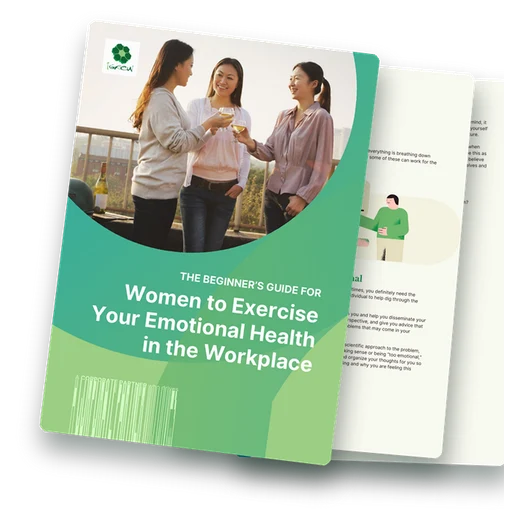
16-page PDF guide from iGROW. Enter your details and we will email it to you.
Thank you. Check your email for the guide.Thank you. Download your guide (PDF) This link works for one hour. Submit the form again for a new one.
Free PDF. Unsubscribe any time.
Support well-being across your team
iGROW works with employers on workplace mental well-being.
Prefer to talk now? Call +65 6871 8777.
If things feel too much right now
You do not have to carry this alone. Reaching out to someone you trust, a friend, family, your manager, or a professional, can make a real difference.
If you are having thoughts of suicide or of hurting yourself, please talk to someone today.
In Singapore (24 hours):
Outside Singapore:
iGROWFIT is here too, no referral needed. Conversations with iGROWFIT are handled by our trained and qualified psychologists and counsellors, kept private, and never shared with your employer except in narrow circumstances, for example where there is a serious risk to someone's safety. Email psychologists@igrow.co or call +65 6871 8777 and ask for iGROWFIT support.
Worried about a colleague? You can use the same contacts to ask how to support them.
Last updated: