
The Complete Guide to Managing Your Stress
Stress is a normal reaction to feeling under pressure, and it can be managed. This free guide explains what stress is, the four types, the signs to watch for, how it leads to burnout, and five practical steps to manage it.
Free PDF · 16 pages · By iGROW's team of psychologists
What you will learn
Preview the guide
What is stress?
Stress is the tension, strain or pressure you feel when a situation asks you to use, adapt or develop new ways of coping. It is the body's natural response to feeling threatened or under pressure, often when a situation feels out of your control. Stress is normal, everyone experiences it, and it is not a weakness.
Stress is natural, everyone experiences it, and it is not a weakness.
From the guide

What happens in your body under stress?
When you feel threatened, your nervous system releases hormones such as adrenaline and cortisol. Your muscles tighten, your blood pressure rises, your breathing quickens and your senses sharpen. This is the fight-or-flight response: it prepares you to face the threat or to get away from it.
What are the four types of stress?
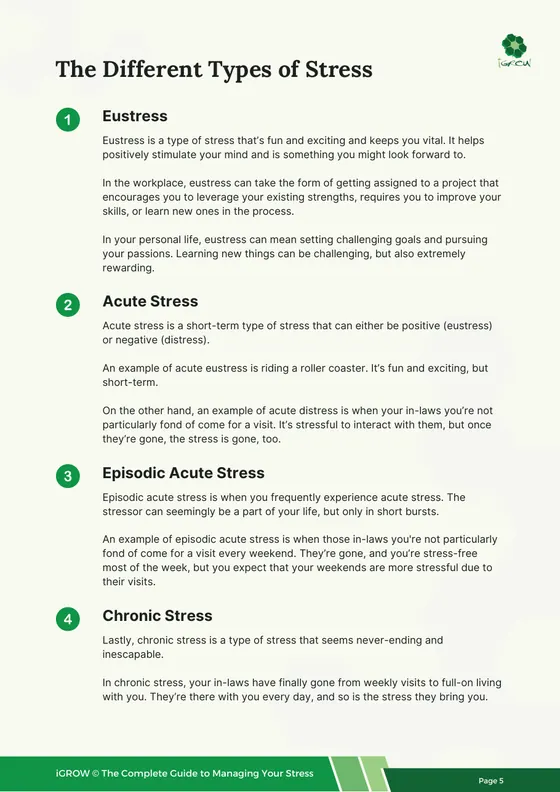
Eustress is positive stress that feels exciting and keeps you motivated, such as a project that stretches your skills. Acute stress is short-lived and can be positive or negative. Episodic acute stress comes in short bursts that keep returning. Chronic stress feels never-ending and inescapable.
Which causes of stress can you control?
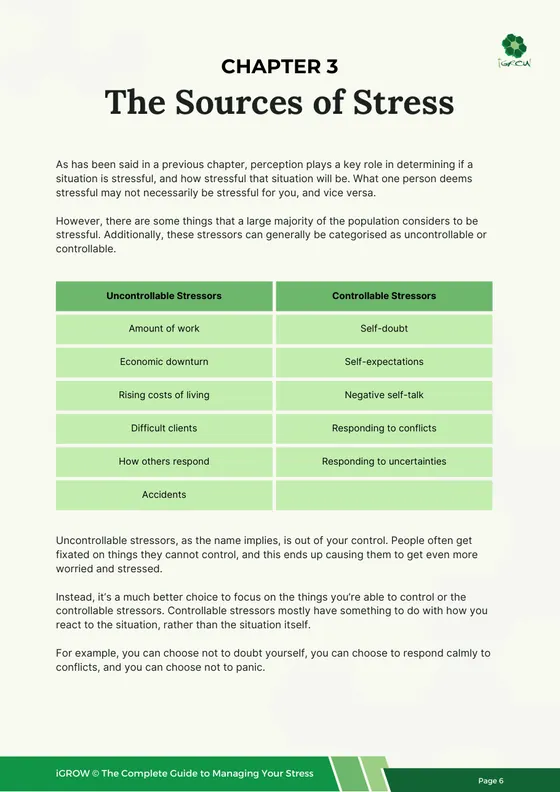
How stressful a situation feels depends partly on how you see it. Some stressors are outside your control, such as the amount of work, an economic downturn, rising costs or difficult clients. Others are within your control: self-doubt, your expectations of yourself, negative self-talk, and how you respond to conflict and uncertainty. Focus on those.
What are the signs of stress?
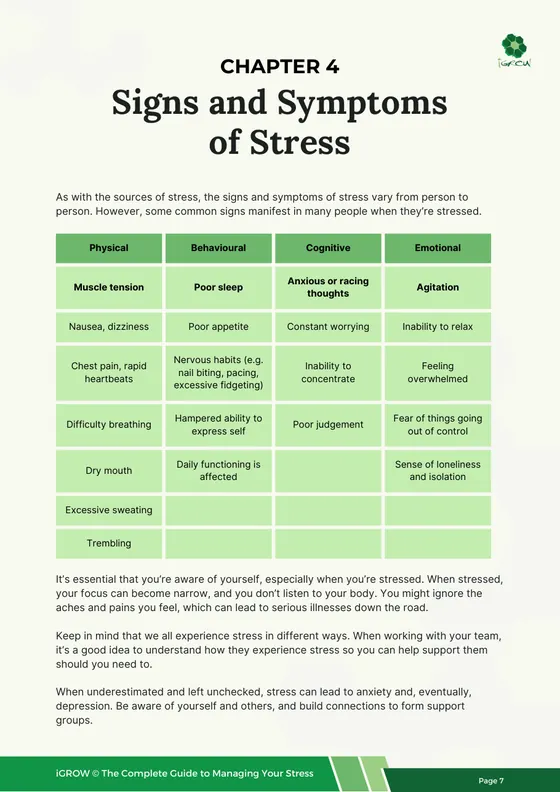
Signs vary from person to person. Physical signs include muscle tension, a racing heart, dizziness and sweating. Behavioural signs include poor sleep, poor appetite and nervous habits. Cognitive signs include constant worrying and trouble concentrating. Emotional signs include agitation, feeling overwhelmed and a sense of isolation.
What is burnout?
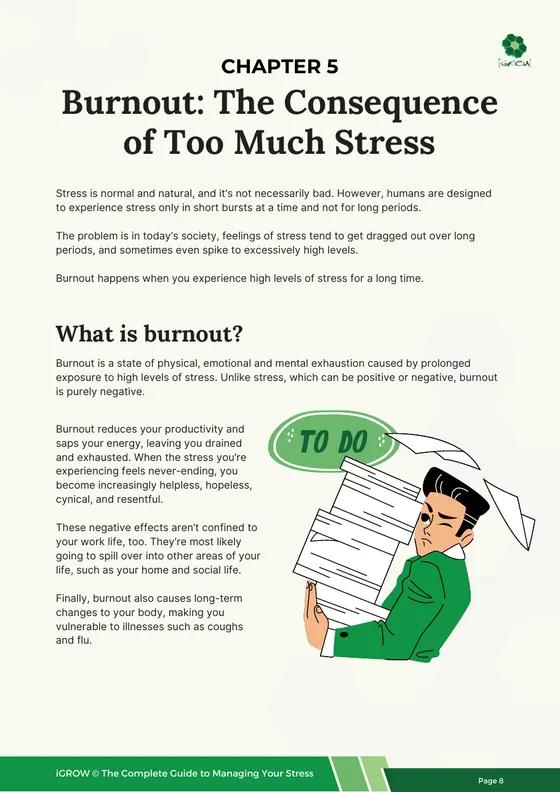
Burnout is a state of physical, emotional and mental exhaustion caused by high levels of stress over a long time. Unlike stress, which can be positive, burnout is purely negative. It drains your energy and productivity, can leave you feeling helpless, cynical and resentful, and spills over into home and social life.
Unlike stress, which can be positive or negative, burnout is purely negative.
From the guide

How can you manage stress? The S.P.E.A.R. method
S.P.E.A.R. is the guide's five-step method for managing stress. Support: lean on positive people. Positive self-talk: replace negative inner dialogue with supportive thoughts. Exercise: stay active through the day and eat well. Awareness: keep checking in on your feelings, thoughts and actions. Rest: breathe deeply during the day and protect your sleep with a regular bedtime.
Support
Lean on positive people, from family, friends and trusted colleagues to counsellors and coaches.
Positive self-talk
Notice negative inner dialogue and replace it with thoughts that help you.
Exercise
Stay active through the day, with walks, stretching and the stairs, and eat well.
Awareness
Keep checking in on your feelings, thoughts and actions so you notice stress early.
Rest
Use deep breathing during the day and protect your sleep with a regular bedtime.
Free PDF, emailed to you. Just your name and email.
Try this now: a two-minute breathing exercise
Sit or lie comfortably with one hand on your chest and one on your belly. Breathe in for a count of five and out for a count of five, focusing on your belly rising and falling. Start with two to five minutes.
Who is behind this guide?
The guide is written by iGROW's team of psychologists, not by one person. iGROW Pte Ltd is a workplace mental health consultancy in Singapore, established in 2009, with a multi-disciplinary team of professional psychologists, coaches, counsellors and consultants who work with employers on workplace mental well-being.


Benedict Lim and Maria Plengsangtip are two of the psychologists on iGROW's team.
Related reading
Insights article: Burnout Prevention at Work: Early Warning Signs and What Singapore Employers Can Do
Insights article: Sleep, Stress, and Workplace Performance: What Singapore Research Shows
Insights article: Singapore Burnout Statistics 2026: What Employers Must Know
Frequently asked questions
Is the guide free?
Yes. It is a free 16-page PDF; enter your name and email and we will send it to you.
Who is this guide for?
Working adults and managers who want to understand stress and manage it, for themselves or for their teams.
Who wrote the guide?
iGROW's team of psychologists wrote the guide. iGROW Pte Ltd is a workplace mental health consultancy in Singapore.
Is this guide a substitute for professional help?
No. If stress is affecting your daily life, speak to a doctor, counsellor or psychologist. If you are in crisis, contact emergency services or a crisis helpline.
How can my company help employees manage stress?
iGROW works with employers on workplace mental well-being. Book a call to talk it through.
Get the free guide
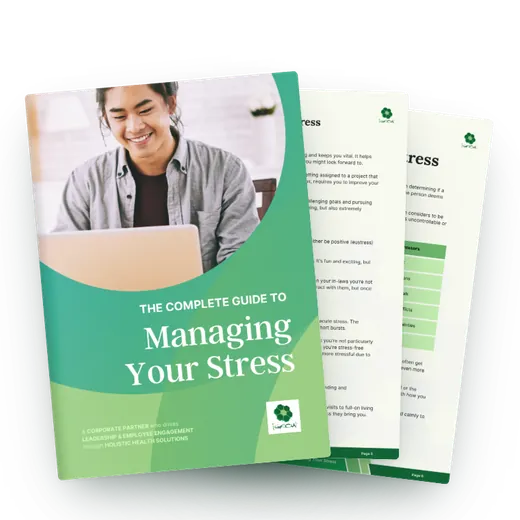
16-page PDF by iGROW's team of psychologists. Enter your details and we will email it to you.
Thank you. Check your email for the guide.Thank you. Download your guide (PDF) This link works for one hour. Submit the form again for a new one.
Free PDF. Unsubscribe any time.
Help your team manage stress
iGROW works with employers on workplace mental well-being.
Prefer to talk now? Call +65 6871 8777.
Last updated: